
Where Stress Hides in Your Body: A Lake Country Massage Therapist Explains
If you've ever finished a long week and noticed your shoulders are halfway to your ears, or your upper back feels like it's been carrying something heavy, you're not imagining it.
Stress doesn't stay in your head.
It moves into your body and tends to settle in the same places every time, which tells you something worth understanding.
It's something I see regularly in my Lake Country massage clients, and it follows a pattern that's worth knowing about.

Your Nervous System Has a Predictable Response
When your body perceives stress, whether it's a deadline, a difficult conversation, or just the cumulative weight of a busy season, it triggers a physical response. Muscles contract, breathing gets shallower, and blood flow shifts. The problem is that this response was designed for short bursts, not the low-grade, ongoing stress that most people are navigating day to day. When stress becomes chronic, the physical effects don't fully release between episodes. They layer.
The areas that tend to hold the most are the ones your body recruits first when it braces. The upper back and shoulders contract when we're on guard. The scalp and jaw tighten when we're concentrating or anxious. The feet and lower legs, which bear the full weight of everything you do all day, rarely get any attention at all despite doing constant work.
Why the Same Spots Keep Getting Hit
Tension accumulates where it has somewhere to go. The trapezius muscle, which runs across the upper back and into the neck and shoulders, is one of the first to respond to stress and one of the last to let go. Most people carry chronic tightness there without realizing how pronounced it's become because they've adapted to it as a baseline.
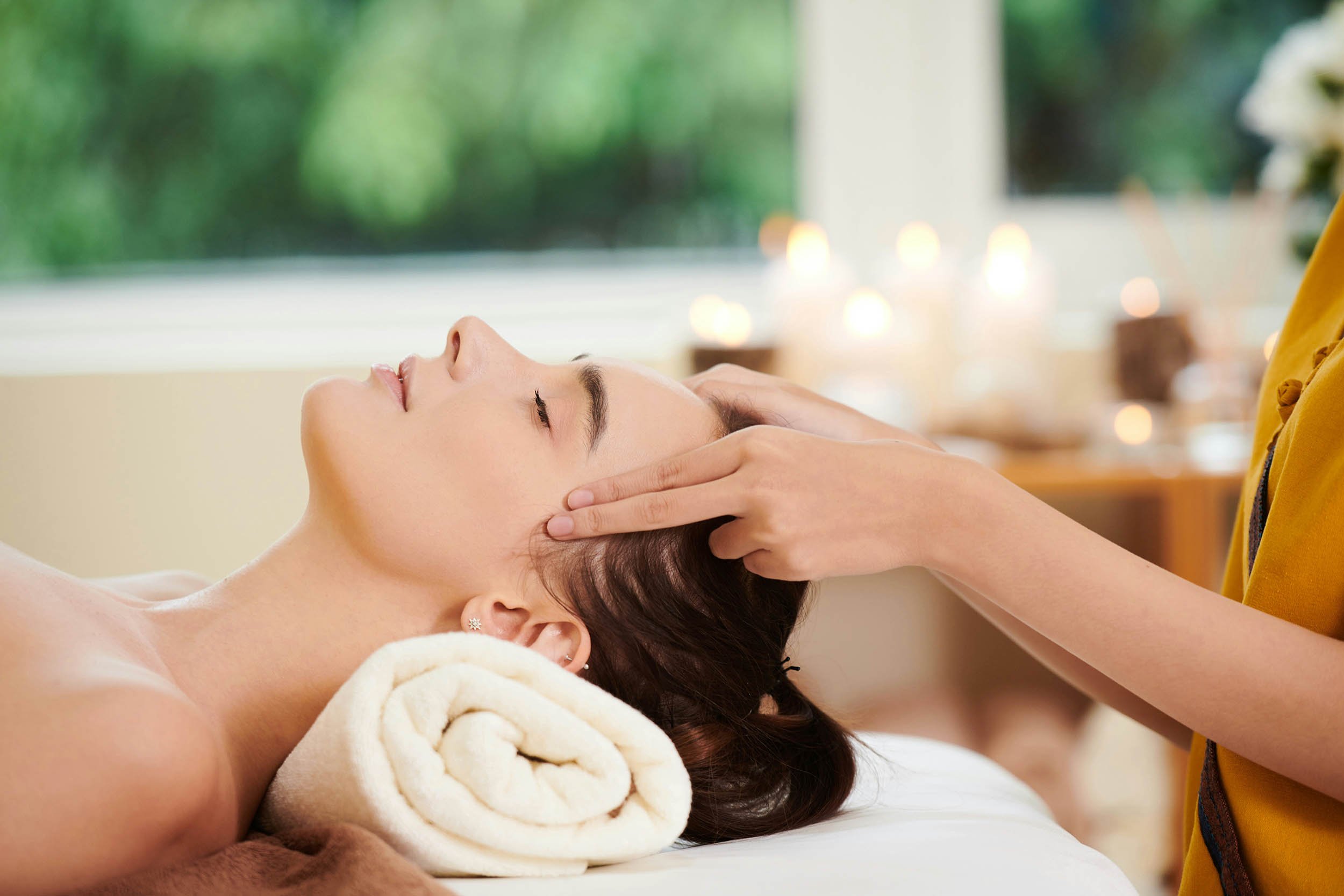
The scalp is less obvious but just as telling. The muscles across the top and sides of the head tighten during periods of concentration and anxiety. Headaches that start at the base of the skull or feel like pressure across the forehead often trace back to tension that's been sitting there for days.
Feet are the most overlooked. They absorb impact all day, are usually confined in shoes, and almost never receive direct attention. Massage work on the lower legs and feet doesn't just feel good locally. It supports circulation and helps the nervous system begin to downregulate, which is part of why foot work tends to produce a whole-body sense of release that surprises people the first time they experience it.
What Releasing Tension Actually Does
There's a reason a good massage leaves you feeling genuinely different rather than just temporarily relaxed. Working through areas of chronic tension helps interrupt the holding pattern your body has settled into. Techniques that address the upper back, scalp, and feet together are particularly effective because they work on multiple points where the nervous system tends to brace, rather than addressing one area while the rest stays contracted.
It's also why the order and combination of a treatment matters. Starting with the feet and lower legs helps the body begin to soften before deeper work on the upper back and shoulders. Finishing with a scalp massage gives the nervous system a signal that it's safe to let go fully. It's a sequence that builds on itself.
What This Looks Like in Practice
My Stress Buster Treatment was put together with exactly this in mind. It combines a foot treatment with organic sugar scrub, foot masque, and lower leg massage, with focused upper back work and a scalp massage to close. The 60 minutes are structured to move through the body in a way that makes sense physiologically, not just as a menu of add-ons.
If you've been carrying tension that doesn't seem to shift no matter how much you rest, it may be that rest alone isn't enough. Sometimes the body needs direct, focused attention to actually release what it's been holding.
If you're looking for a Lake Country massage experience designed around how stress works in the body, I'd love to welcome you in. Learn more about the Stress Buster Treatment.